
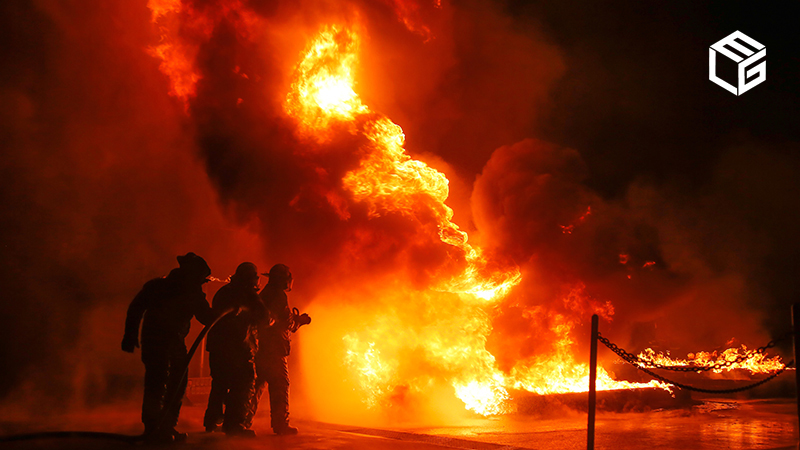
Compared to the US Air Force’s tanker and bomber bases, the airlift bases are less focused on fuel-heavy operations. However, airlift transport bases are home to the massive C-5 Galaxy aircraft, which were designed for long-range flights and intercontinental transport. The C-5A Galaxy alone could hold over 50,000 gallons of fuel. To contain potential fires, airlift bases were equipped with a Class B firefighting foam suppression system, and ARFF personnel were trained to respond to large fuel fires using firefighting foam.
How military firefighters were exposed to AFFF at US airlift transport bases
Aqueous film-forming foam (AFFF) was the US military’s standard for combating fuel fires since the 1970s. This was about the same period that the US military started using its C-5 Galaxy models for airlift transfers. There was a heavy AFFF presence at these locations because these cargo aircraft are filled with tens of thousands of gallons of fuel to prepare for long trips over the Atlantic or the Pacific Ocean. In times of intense operations, they were not just used to deliver heavy tanks, but also to send massive supplies of fuel to tanker bases.
If you worked at an airlift base as a military firefighter or personnel, you may have been exposed to AFFF through the following:
- Specialized training for Aircraft Rescue and Firefighting (ARFF) personnel
- Firefighting training where you mixed AFFF concentrate and water
- Firefighting drills where you sprayed AFFF mixture onto aircraft, vehicles, or buildings
- Responding to emergencies and other crises, such as fuel fires and leaks
- Loading airport rescue firefighting trucks onto cargo aircraft
US airlift bases with historical use of toxic firefighting foam
Many veterans and military firefighters who have been exposed to AFFF between 1970 and 2024 may have been unaware of its serious health consequences for a long time. Some types of cancer could stay dormant for years or decades (depending on their latency period), and a diagnosis would only be made later, long after a military firefighter had retired or relocated to other bases. However, a long latency period doesn’t automatically disqualify you for a claim. For example, being exposed to AFFF during a 2006 crash site may be related to a cancer diagnosis discovered within the past 2 to 3 years. In these cases, you may still be eligible for an AFFF claim for cancer.
Reviewing your history of exposure at the US military bases you served is crucial for tracing the connection. If you worked at any of these airlift transport bases or other closed airlift bases like Norton Air Force Base, you were likely to have encountered AFFF:
- Travis Air Force Base
- Dover Air Force Base
- Joint Base Lewis–McChord (formerly McChord Air Force Base)
- Little Rock Air Force Base
- Joint Base McGuire–Dix–Lakehurst
- Charleston Air Force Base (now Joint Base Charleston)
Aside from being a major tanker base, the Travis Air Force Base also hosts one of the biggest cargo fleets, including the C-17 Globemaster II and the massive C-5M Super Galaxy. Meanwhile, Dover Air Force Base is still in the early stages of its cleanup of toxic “forever chemicals” from AFFF. Dover AFB has at least 9 sites contaminated by AFFF, including the 2006 C-5 Galaxy crash site. Two decades after the crash, the site is still considered a hotspot for toxic chemicals after firefighting foam was sprayed onto the aircraft, which was heavily loaded with fuel for a long trip over the Atlantic Ocean.
ELG Law can help you file an AFFF claim
ELG Law has over 35 years of experience in assisting military firefighters in seeking justice and compensation for chemical exposure in service. If you are a veteran military firefighter who has recently been diagnosed with cancer, our attorneys can check your medical records and military service history to see if you qualify for AFFF compensation claims. You may also file VA disability claims if there is an established connection between your exposure in service and your diagnosis. If qualified, our attorneys can handle the paperwork and file the claims on your behalf.