
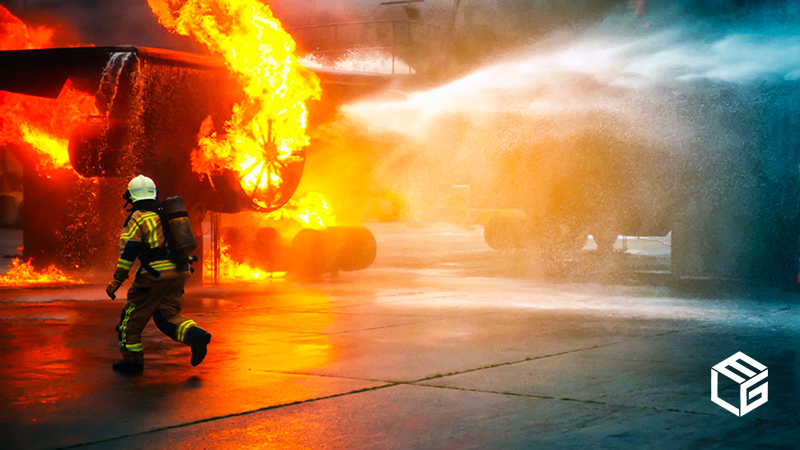
During the Cold War and several decades after, the US military’s fighter bases would serve as the country’s foundation of tactical air power. Frequent missions would require both airmen and firefighters to be on alert for rapid deployment. To train for aircraft rescue missions, firefighters would be regularly trained to use aqueous film-forming foam (AFFF), which had been found to contain toxic "forever chemicals" that accumulate inside the body and potentially cause serious health conditions and cancer.
High-frequency operations of US Fighter Bases require AFFF usage
Fighter jets like the F-15 Eagle and the F-16 Fighting Falcon carried less fuel than bombers, ranging from 1000 to 3500 gallons, depending on the aircraft model. These planes were flown much more often than any bomber or cargo plane, which means that military base operations and firefighting training were constantly active. Firefighters and crash rescue units were crucial in ensuring the safety of these frequent flights, and aqueous film-forming foam (AFFF) was used for firefighting drills and training for decades.
The US Air Force also holds advanced combat exercises that cause an influx of firefighter calls. For example, the Red Flag exercises at Nellis Air Force Base run for two to three weeks multiple times a year, where thousands of servicemembers join the intense air-to-air combat training. Firefighter training is also intensified before such exercises, because Nellis AFB firefighters get more ground and in-flight emergencies during Red Flag periods.
With frequent exposure to fuel fire emergencies, fighter base firefighters have been constantly exposed to AFFF and the toxic "forever chemicals" in the foam. Aside from Nellis AFB, bases with historical use of AFFF include active military installations like Luke Air Force Base and Shaw Air Force Base. If you served in a former fighter base, you may still qualify for a claim, including exposure at George Air Force Base and Homestead Air Reserve Base.
Potential health consequences of AFFF exposure at a US fighter base
Fighter bases in the US relied heavily on AFFF for military installations and airports due to its rapid knockdown effect. The dangers of fluorine-based foam would eventually come to light, causing the Department of Defense to begin the phase-out process. Despite these ongoing efforts, military firefighters from the 1960s up to 2024 may have already had their health compromised by AFFF exposure.
If you served as a military firefighter at any active or former fighter base, you were likely to have encountered AFFF in training and emergencies. Unfortunately, the "forever chemicals" in the foam are known for bioaccumulation, which means they can build up in human blood and organs, and potentially increase the risk of the following conditions:
ELG Law can help you file a claim for AFFF exposure at fighter bases
ELG Law has been assisting victims of chemical exposure for over three decades. We understand how tedious and time-consuming the filing process is, whether you are filing AFFF claims against the manufacturer or VA disability claims. If you have been diagnosed with any of the AFFF-related conditions mentioned above, contact us immediately so that our attorneys can review your documents. We only need your medical records (showing diagnosis) and military service records (showing proof of exposure) to check your eligibility for claims.