
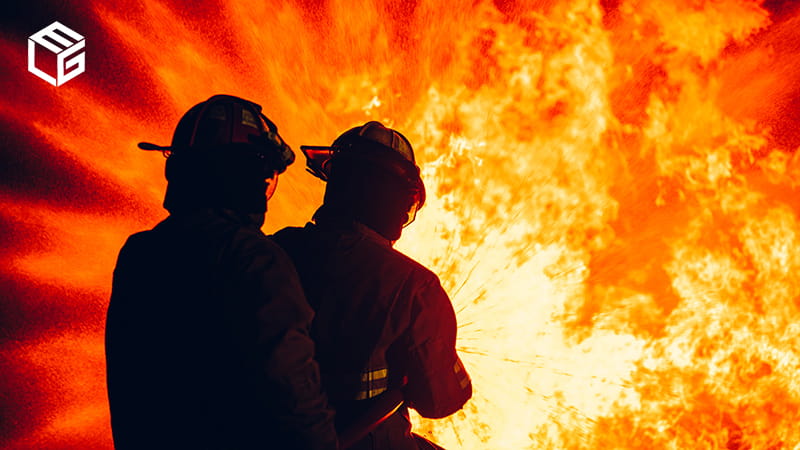
Recent research reveals that firefighters were exposed long after the flames were out, and exposure science underestimated secondary exposure phases where toxic contamination persisted after active suppression.
What overhaul operations involve
Overhaul refers to the post-fire phase in which firefighters remain inside the structure to search for hot spots, pull apart walls and ceilings to expose hidden fire, remove smoldering debris, and ensure no rekindling occurs. These jobs are physically demanding and time-consuming. Firefighters work in areas containing smoke residue, chemical contamination, and the firefighting foam used during suppression.
During overhaul, firefighters often remove their breathing apparatus. The immediate fire danger has passed, so they work without SCBA to communicate more easily and reduce physical strain during extended operations. This creates prolonged inhalation exposure to whatever chemicals remain in the air and on surfaces.
Why overhaul exposure was overlooked
Most older overhaul studies focused on combustion gases, particulates, benzene, PAHs, cyanide, and carbon monoxide. These studies measured traditional smoke toxins but did not evaluate PFAS contamination from firefighting foam. Because PFAS and AFFF contamination science is relatively new compared to traditional firefighter toxicology, researchers historically failed to study PFAS-specific exposure during overhaul, even though firefighters remained in contaminated environments long after foam application.
The gap in research matters a great deal here. For decades, firefighter exposure studies focused mainly on smoke inhalation while largely overlooking the persistent chemical contamination from firefighting foam. Smoke clears after a fire is out. PFAS lingers on surfaces, in dust, in water runoff, and potentially in airborne particles for hours or days after the flames are gone.
Recent research reveals extended PFAS exposure during overhaul
The overhaul phase, which involves searching for hot spots and cleaning up AFFF residue, is identified in research as a key exposure window. Masks often come off during these operations, even though PFAS contamination continues to sit on surfaces, gear, dust, and runoff long after the fire is out.
A key finding is the significant risk that comes with overhaul operations, when the breathing apparatus often comes off. Research shows AFFF residue and ultra-fine particles remain in the air and on surfaces for extended periods after suppression ends. Exposure isn't just about direct contact with flames or foam. How long someone is exposed carries as much weight as the intensity of that exposure.
The research suggests that laboratory-based exposure models may not fully account for the duration, heat, environmental persistence, and operational complexity of real structural fires. Lab testing looked at brief exposure scenarios, but actual overhaul operations involve hours of contact with contaminated environments. Science is shifting toward real-world data over what happens in a controlled setting.
PFAS contamination found at fire stations
PFAS contamination was found inside fire stations themselves, demonstrating that chemicals tracked back on gear and equipment created ongoing exposure even after firefighters left the fire scene. Studies detected PFAS in fire station dust, on surfaces in apparatus bays, and in living quarters where firefighters spent time between calls.
The fluorine found in fire station dust samples was almost entirely from PFAS compounds that researchers had never identified before, pointing to a range of chemical exposure that went well beyond what manufacturers disclosed. Station contamination meant firefighters were absorbing PFAS not just at fires but continuously throughout their careers from residue accumulating in the places they worked every day.
Why the duration of exposure matters for legal claims
Many people think they don't have a case if they weren't the lead nozzleman spraying foam directly. This research challenges the assumption that only direct application creates dangerous exposure. Duration and proximity during cleanup operations may be equally hazardous.
Foam application is just one small part of the exposure picture. Hours spent walking through foam runoff, breathing off-gassing chemicals during overhaul, handling contaminated gear during cleanup, and working in stations where PFAS had built up in dust and on surfaces all add to the cumulative load.
Firefighters often stayed in contaminated environments long after the fire was extinguished, working through overhaul and cleanup operations in conditions that carried real exposure risk. Earlier studies focused on smoke toxins, but recent PFAS research shows that gear, dust, and residual foam also contribute to exposure, making it a concern that extended well beyond whoever was spraying.
Secondary roles still created significant exposure
Firefighters who worked overhaul, conducted salvage operations, cleaned equipment after fires, or simply worked in contaminated fire stations absorbed PFAS through multiple pathways over extended periods. The driver who never held a nozzle but spent hours at fire scenes during overhaul breathed contaminated air. The firefighter who was cleaning gear and equipment had repeated exposure to PFAS residue. The instructor who worked at a training facility where foam was used regularly had chronic low-level exposure.
Such secondary exposure scenarios were never adequately assessed in early studies of direct foam application. The gap in scientific understanding does not mean the exposure was not real or dangerous. It means manufacturers and researchers failed to study the full scope of how firefighters encountered their products.
ELG Law can help you file your AFFF claim
If you worked as a firefighter and participated in overhaul operations, equipment cleanup, or training at facilities where AFFF was used, you were likely exposed to PFAS even if you never personally applied foam. ELG Law has represented firefighters exposed to AFFF for over 35 years. Contact us for a free case evaluation to determine whether your diagnosis and occupational exposure support a claim for compensation, regardless of whether you were the primary nozzleman or worked in secondary roles where exposure occurred during overhaul and cleanup operations.