-
About »
- Insulin MDL
-
Cases »
- Diseases
- Testimonials
- Government
- Contact
- Get Help Now
-

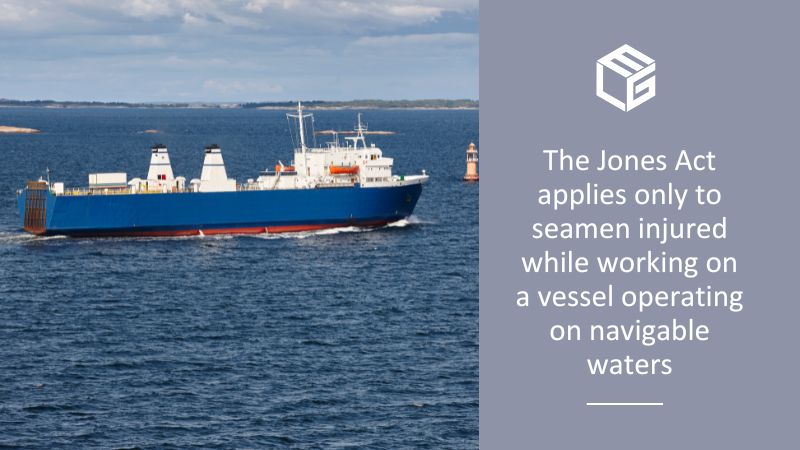
The Jones Act applies only to seamen who are injured or become ill while working in the service of a vessel operating on navigable waters. Courts examine whether you qualify as a seaman, whether your injury occurred on navigable waters, and whether your work was connected to a vessel in navigation.
When workers spend at least 30% of their working time on a vessel or identifiable fleet of vessels, they are considered seamen. This 30% rule, established in Supreme Court cases like Chandris, Inc. v. Latsis (1995), measures the substantial duration of vessel connection rather than requiring exclusive shipboard work.
Your duties must contribute to the vessel's operation or accomplishment of its mission. The courts interpret this to include navigation, maintenance, cargo handling, and support roles that enable the vessel to operate. Also, both the duration and nature of the work assignments you perform must have a substantial connection to the vessel.
If you are injured on the high seas, rivers, lakes, or waterways used for interstate or foreign commerce, the Jones Act applies. A navigable water is any water capable of supporting maritime commerce, such as offshore platforms that vessels can reach and docks and piers where workers perform vessel-related duties.
Any watercraft capable of transportation qualifies as a vessel under the Jones Act. This includes tugboats, barges, fishing boats, offshore supply ships, cargo vessels, dredges, and navigable floating platforms. Stewart v. Dutra Construction Co. (2005) expanded this definition to cover diverse watercraft involved in maritime commerce.
The employment connection the Jones Act requires stems from your assignment to a particular vessel or identifiable fleet. Sporadic or infrequent vessel work generally fails to establish seaman status, whereas consistent assignments meeting the 30% threshold succeed.
You are subject to the Jones Act if your employer operates vessels in navigation and your job duties directly support the vessel's mission. The Jones Act is applicable to maritime companies engaged in vessel operations, but not to maritime companies with land-based operations.
Injuries from employer negligence, coworker mistakes, unsafe conditions, insufficient equipment or training, or unseaworthy vessels under general maritime law fall under Jones Act protection. The law applies a diminished causation standard requiring only slight negligence to meet the fault threshold.
This lenient standard, often termed the "featherweight" burden, establishes that employer negligence does not need to be the dominant factor in your injury. Any contribution by negligence to the harm you experienced activates Jones Act coverage and enables damage recovery.
We have extensive experience analyzing whether the Jones Act applies to maritime injury cases based on seaman status, vessel assignment, and navigable waters requirements. The type of damage you can recover, and the legal framework that governs your claim, will depend on whether you are eligible to file a Jones Act claim. To find out whether the Jones Act applies to your situation and what compensation you may be entitled to under maritime law, contact the Environmental Litigation Group today.
Monday – Friday
8:00 AM – 5:00 PM
Saturday & Sunday
Closed
