-
About »
- Insulin MDL
-
Cases »
- Diseases
- Testimonials
- Government
- Contact
- Get Help Now
-

Workers' compensation or Jones Act claims depend on the nature of your work and the relationship you have with a vessel. Maritime workers who spend at least 30% of their work time on a vessel in navigation file Jones Act claims, whereas land-based maritime workers typically file under the Longshore and Harbor Workers' Compensation Act, and other land-based employees use state workers' compensation systems.
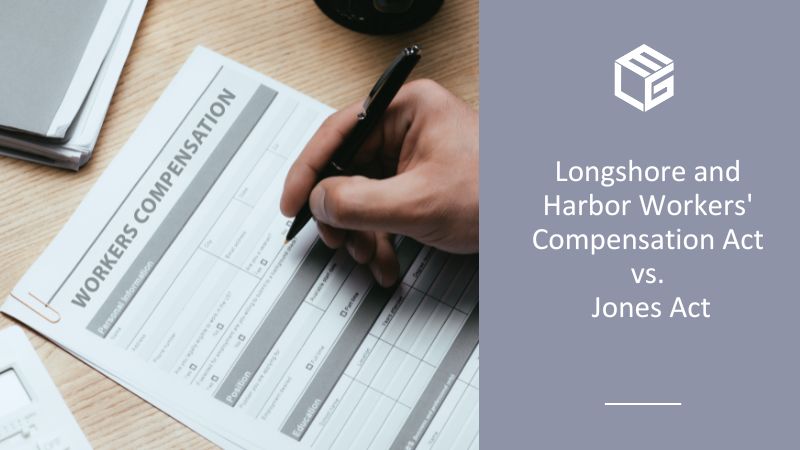
Maritime workers who spend at least 30% of their work time aboard a vessel or fleet in navigable waters are specifically covered by the Jones Act. The courts determine seaman status by looking at your actual job duties, your relationship to an identifiable vessel, and whether you are contributing to the vessel's function.
The Jones Act requires that you prove that your injuries were caused by employer negligence or vessel unseaworthiness. Seamen are entitled to recover damages such as medical expenses, lost wages, lost earning capacity, pain and suffering, and emotional distress under the fault-based system. The Jones Act also provides maintenance and cure benefits, which cover living expenses and medical care regardless of fault.
The workers' compensation system is based on a no-fault system, which provides benefits without the need to prove negligence on the part of the employer. Workers' Compensation, on the other hand, provides only scheduled benefits, such as partial wage replacement and medical care, and does not compensate for pain and suffering.
Claimants under the Longshore and Harbor Workers' Compensation Act (LHWCA) are generally those who spend less than 30% of their working time on vessels. No-fault coverage is offered to maritime workers at docks, piers, and terminals, such as longshoremen, harbor workers, and ship repairers.
The LHWCA provides scheduled benefits, including partial wage replacement and medical care, without requiring proof of fault. LHWCA benefits are more limited than Jones Act damages, but there is no need to prove negligence on behalf of the employer, just as with Workers' Compensation.
Land-based employees who do not work in maritime industries file claims under their state's workers' compensation system. While these programs provide benefits and medical care, they don't allow lawsuits or recoveries for non-economic damages like pain and suffering against employers.
A variety of factors determine which system will cover your injury, including your job duties, your time spent on vessels versus land, your connection to an identifiable vessel, the location of the injury, and whether your work contributes to the operation of the vessel. The wrong type of claim can result in missing system-specific filing deadlines, or a claim cannot be filed under the Jones Act because it has not been identified as applicable to the claim.
Our attorneys have extensive experience evaluating maritime injury cases to determine whether workers should file under the Jones Act, the LHWCA, or their state Workers' Compensation system. The distinction between these systems significantly affects the compensation you can recover and the legal process you must follow. Reach out to Environmental Litigation Group today for a free case evaluation to find out the right claim for your circumstances.
Monday – Friday
8:00 AM – 5:00 PM
Saturday & Sunday
Closed
