-
About »
- Insulin MDL
-
Cases »
- Diseases
- Testimonials
- Government
- Contact
- Get Help Now
-

If a vessel meets the federal definition of "any type of watercraft or other artificial contrivance used, or capable of being used, as a means of transportation on water," it qualifies under the Jones Act. Any vessel that meets these requirements must be afloat, able to move, and engaged in commerce, whether docked or anchored.
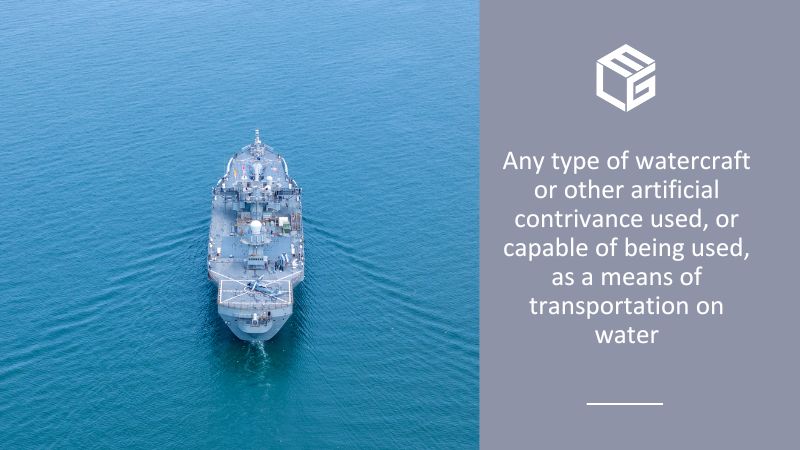
The vessel must operate in navigable waters of the United States, including oceans, gulfs, rivers, bays, sounds, and the Great Lakes. A vessel must be in navigation instead of being placed in drydock or undergoing major maintenance. Several features, such as crew quarters, bilge pumps, lifeboats, raked bow design, and Coast Guard registration, qualify structures as vessels when they meet the transportation capability standard.
Watercraft engaged in maritime commerce and transportation on navigable waters are covered by the Jones Act. When a vessel meets the transportation capability standard and is used in navigation, courts recognize a number of vessel types as qualifying:
Certain floating structures qualify as vessels even without self-propulsion if they are capable of maritime transportation. Pontoon barges, floating platforms with mobility, and jack-up rigs under specific conditions can meet vessel standards when they function as watercraft capable of being used for transportation rather than as permanently positioned structures.
Courts assess these borderline cases individually, examining whether the structure's primary purpose and design support transportation functions or whether it serves as a fixed work platform.
Due to their lack of transportation capability, mobility, or operational status, certain maritime structures and watercraft are not subject to the Jones Act. Courts exclude structures that do not meet the standard for vessels in navigation:
We have years of experience representing victims of maritime injuries who work aboard vessels covered under the Jones Act. The vessel determination affects whether you can pursue Jones Act claims or fall under different maritime compensation systems like LHWCA. Contact Environmental Litigation Group, P.C. today to have our attorneys evaluate your case, determine whether Jones Act coverage applies to your employment and potential injury claims.
Monday – Friday
8:00 AM – 5:00 PM
Saturday & Sunday
Closed
