
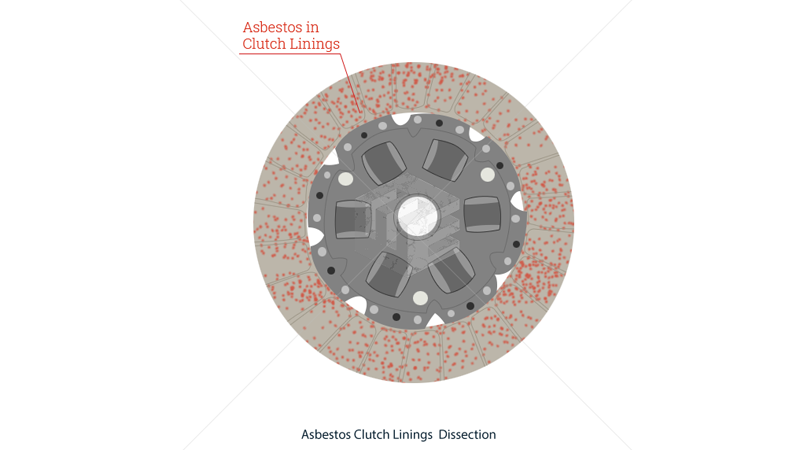
As clutch linings become worn, they release dangerous asbestos fibers in the air. When the moment comes for them to be replaced or for maintenance work to be performed on the car, the risk increases for the auto mechanic to be exposed to asbestos.
Claim EvaluationPRODUCT USE

Before Kevlar and fiberglass were used for manufacturing clutch linings, the naturally occurring mineral known as asbestos was seen as the solution for better wear.
Although they have a different purpose than brake linings, clutch linings are faced with similar friction as they are meant to keep two surfaces in contact. During the friction process, the asbestos-containing material started to deteriorate, leaving the asbestos fibers in a friable state. As the mechanics performed maintenance work on the car, they would have been subjected to asbestos exposure. You could have been exposed if:
For working professionally with asbestos-containing materials like clutch linings, you deserve to receive the compensation needed to cover the treatment costs for the conditions you might have developed. We will gather all the information needed to file claims against the companies responsible for exposing you to asbestos.
Free evaluation
Monday – Friday
8:00 AM – 5:00 PM
Saturday & Sunday
Closed