
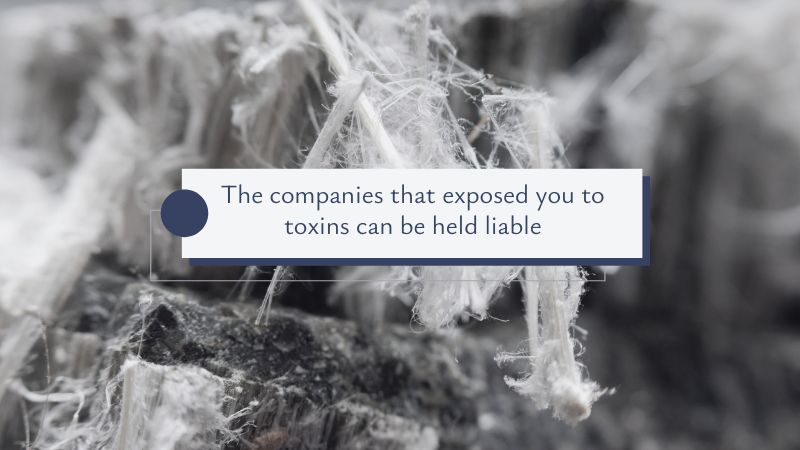
United States Steel Corporation was formed in 1901 through the merger of Carnegie Steel Company, Federal Steel Company, and National Steel Company, and it quickly became one of the dominant industrial forces in American history. For decades, the company ran some of the largest steelmaking complexes in the country, including Gary Works in Indiana, Clairton Works in Pennsylvania, and Fairfield Works in Alabama. Industrial hygiene records from U.S. Steel facilities confirm that asbestos was present across steelmaking operations in insulation, gaskets, brakes, and refractory materials. Workers who spent years inside these plants before the 1980s may have accumulated significant exposure without ever being warned of the risk.
Claim EvaluationProducing steel requires sustained extreme heat across every stage of the process, from coking and iron making to rolling and finishing. Asbestos was built into the infrastructure of U.S. Steel plants because no other widely available material at the time offered the same combination of heat resistance, fireproofing, and durability under continuous industrial conditions.
Industrial hygiene analyses of U.S. Steel facilities have identified asbestos use across a range of applications, concentrated in areas where heat management was most demanding. Boilers and powerhouses, blast furnaces and hot blast stoves, coke ovens, steam distribution systems, rolling mills, pumps, valves, compressors, turbines, and electrical control systems all relied on asbestos-containing components throughout the mid-twentieth century. Peer-reviewed research on the steel industry specifically identifies gaskets, protective cloth, insulation materials, brakes, and refractory products as the primary applications, particularly during maintenance and furnace relining work.
Because these materials were embedded throughout plant infrastructure rather than concentrated in one area, workers across departments and job categories encountered them as a routine part of their workday. The following occupations at U.S. Steel facilities carried potential asbestos exposure:
The workers most directly affected were those whose jobs required them to physically interact with insulated systems on a regular basis. Maintenance crews, pipefitters, boilermakers, and millwrights removed and replaced pipe insulation, repaired boilers and furnaces, cut into insulated equipment, replaced gaskets and valve packing, and relined furnaces and hot blast stoves. Shutdown and turnaround work, when large sections of the plant were taken offline for repairs and rebuilds, concentrated that exposure further by bringing multiple trades into contact with deteriorating asbestos materials at the same time.
Workers outside the maintenance trades were not necessarily protected. Anyone who entered boiler rooms, powerhouses, mechanical shops, or processing areas where asbestos dust had accumulated on surfaces and equipment over years of operation could inhale fibers simply by being present. Once asbestos fibers become airborne, they can remain suspended long enough to reach workers well beyond the immediate work area, and U.S. Steel plants were large enough that contamination in one section of a facility could affect workers throughout it.
U.S. Steel workers who spent time in these facilities and later developed lung cancer or mesothelioma may be entitled to compensation. If the physical demands of your illness make pursuing a claim on your own difficult, a family member is able to manage the process on your behalf. If you pass away before a claim is resolved, compensation will be directed to your surviving family members.
Lung Cancer MesotheliomaIf your diagnosis involves a non-cancerous condition such as asbestosis, pulmonary fibrosis, pleural plaques, pleural effusion, diffuse pleural thickening, COPD, pleurisy, lung nodules, lung spots, asthma, pneumonitis, tuberculosis, rounded atelectasis, or lung scarring, do not accept that diagnosis without consulting at least one additional physician. These conditions share symptoms with other diseases and are misdiagnosed at a high rate in people with occupational asbestos exposure histories.
If your father, spouse, or another family member worked at a U.S. Steel facility, later developed an asbestos-related disease, and died without filing a claim, that does not mean compensation is out of reach. Wrongful death claims can be filed on behalf of deceased workers, and our attorneys handle the entire process once we have the necessary documents. We need the work history and medical records of your loved one, along with their death certificate.
After reviewing those materials, we will tell you directly whether a claim is viable and, if it is, prepare and file everything on your behalf. Recovered compensation can be applied toward funeral costs, medical expenses incurred before their passing, and other financial losses the family has faced.
Monday – Friday
8:00 AM – 5:00 PM
Saturday & Sunday
Closed
